
Makeup has no age limit, and this story is not about looking younger for its own sake. It is about making sure the products you love still flatter the face you have today. Because some of the most common habits in our routines — habits we learned from tutorials filmed when we were twenty-two — quietly work against us as our skin, features and lifestyles change.
Here is the good news: none of these mistakes require a new face, a complicated technique or a full trash-and-rebuild of your makeup bag. Each one has a small, gentle fix. Seven of the most common offenders are below, and number four is probably sitting on your vanity right now.
This is general beauty information, not medical advice. Skin and features are personal; if something you use causes irritation or you want guidance for a specific concern, a qualified dermatologist or professional makeup artist can help.
1. Setting your whole face with heavy powder
The habit starts with good intentions. You finish your foundation, reach for the translucent powder and dust it everywhere — forehead, cheeks, chin, under the eyes — because matte skin photographs well and “sets” the look. Some of us even bake: a thick layer of powder left to sit for minutes before the excess is swept away.
The trouble is that powder sits on top of skin, and as skin naturally becomes drier over time, it starts clinging to every dry patch and settling into the fine lines around your eyes and mouth. What looked smooth at 7 a.m. can, by lunch, look flat and chalky, with product emphasizing exactly the lines you would rather soften. A fully matte face also removes the natural dimension that reads as youthful — real skin has a slight sheen, and when you erase it, the face can look one-dimensional and tired.
The fix is not to banish powder, but to use it strategically. Keep a small fluffy brush (not a powder puff) and press a fine, finely milled powder only where you genuinely get shine: the sides of the nose, the chin, the center of the forehead. If your under-eye concealer creases, set just that area with a whisper of powder. Leave the cheeks alone — a little bare skin there is an asset. And if your skin tends dry, a luminous setting powder or a quick spritz of facial mist over the top can bring the life right back.
2. Laying foundation on skin that wasn’t prepped
This one is quiet and sneaky: washing your face, maybe drying it, and going straight in with foundation. It takes thirty seconds off your morning, so it feels efficient. But makeup applied to unprepped skin grabs onto dry patches and flaky spots, clings around the nose, and settles into lines faster — the base looks patchy and worn long before you intended to take it off.
When skin is dehydrated, foundation has a harder time sitting smoothly on top of it, and the whole face reads duller. The result ages you twice: once through the texture the foundation catches on, and again through the flat, papery finish that dry skin gives the entire look.
You do not need a ten-step routine underneath your makeup. Sixty seconds is enough. In the morning, apply a moisturizer your skin likes, give it a minute to settle, then follow with sunscreen — follow the product label for how much and when to reapply. If you like primer, use it sparingly and only where it earns its place: a gripping or blurring primer through the T-zone, a hydrating one on the cheeks. If your skin feels comfortable with just moisturizer, that can be plenty. The goal is a base that has something healthy to hold onto, so your makeup moves with your face instead of flaking off it.
If you want a calm, barrier-friendly routine to build this habit on, our barrier-first skincare routine is a good place to start.
3. Harsh lip liner and flat matte everything
Somewhere around 2016, the rule became: over-line slightly outside the natural lip, fill with the longest-wear matte liquid lipstick you could find, and never let it move. That formula was engineered for a face in its twenties, on camera, for hours. On lips today, the same approach can do the opposite of what you want.
As lips lose a little definition over time, drawing a hard border beyond the natural edge emphasizes the mismatch instead of hiding it — the liner ring becomes visible, especially when the lipstick inside fades at a different rate. Flat matte liquid formulas cling to dry lips and settle into the vertical lip lines, making lips look thinner and dehydrated rather than plush. And lipstick has a way of migrating into the fine lines around the mouth, a phenomenon anyone who has worn a bold shade for a full day knows well.
The update is easy. Trace your liner right at the edge of the lip — or a hair inside it — and blend it inward so there is no hard line where color stops. Choose a cream, satin or tinted-balm finish over a bone-dry matte; modern comfortable formulas give the same color payoff without the cracked feeling. Using liner all over the lip as a base (not just a ring around it) also helps color fade evenly and stops feathering. If you love a defined lip, match the liner to your lipstick rather than going two shades darker. A rose or berry with a soft sheen makes the whole face look rested.
4. Wearing full-coverage foundation like it’s a uniform
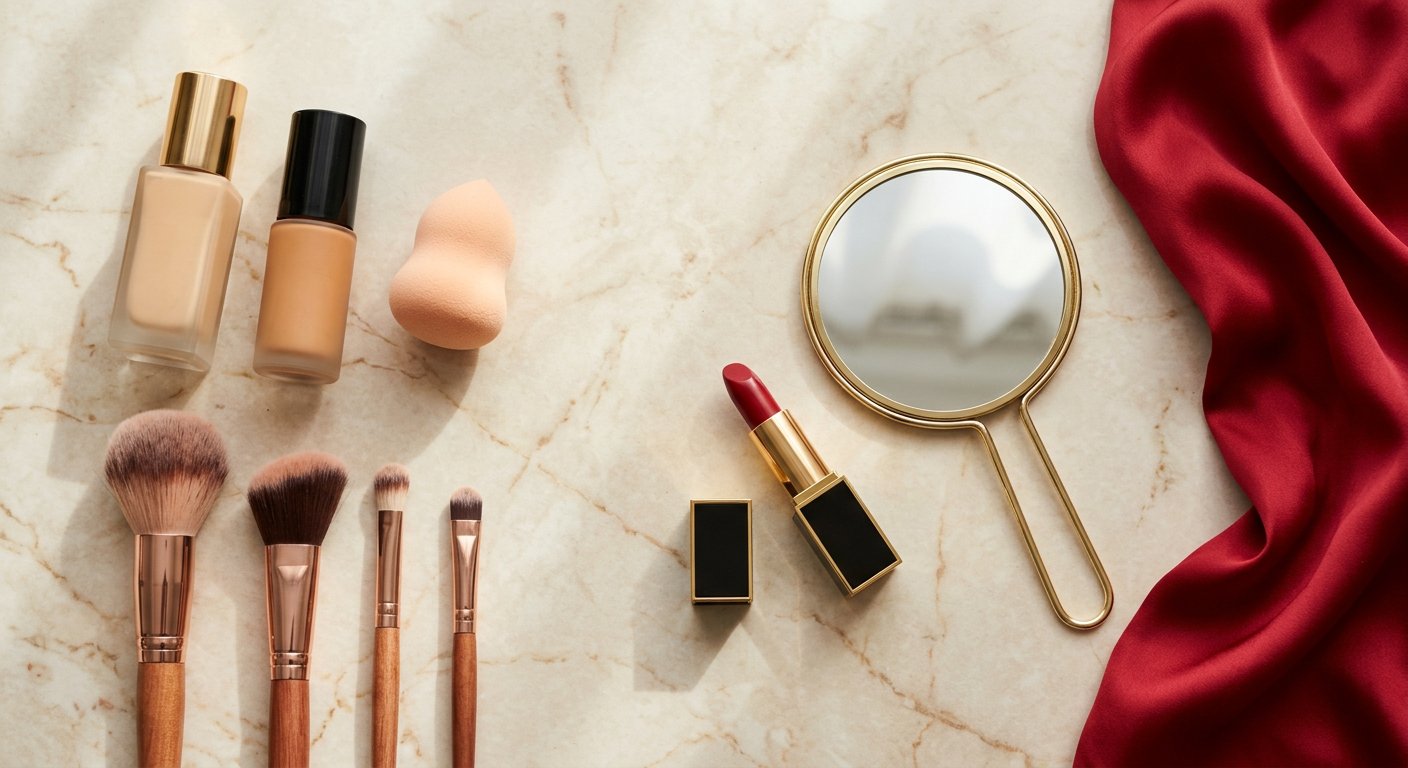
Here it is — the mistake on everyone’s vanity. Right now, somewhere on your shelf, there is a bottle of full-coverage foundation you bought for an event, a breakup or a big photo, and it has quietly become your everyday default. A thick, high-coverage base feels safe. It erases everything in one pass. But wearing it daily is one of the fastest ways to add years to your face.
Full coverage applied all over replaces the face’s natural dimension — the subtle shifts in tone and shadow that make skin look alive — with a single flat plane of pigment. In daylight, that reads mask-like. The heavier layer also has more places to go as the day goes on: it settles into expression lines, gathers around the nose and mouth, and can oxidize to a tone warmer than your skin, which drags the face down. The instinctive response — another layer of powder on top — is exactly mistake number one, and together they build the cakey look everyone dreads.
You do not have to throw the bottle out. Save full coverage for the days you actually need it: weddings, photographs, long nights out, days when you want maximum polish. For daily wear, try the sheer option instead — a skin tint, a tinted moisturizer, or your foundation mixed with a little moisturizer on the back of your hand so it sheers out to a second-skin finish. Then spot-conceal: a tiny dot on redness, a mark or around the nose does more than a mask ever could. Build in thin layers with a damp sponge rather than one heavy sweep, and check your shade in daylight against your neck — most of us are wearing foundation slightly too warm or too dark from a past summer. Some real skin showing through is not a flaw in the routine. It is the whole point.
5. Heavy liner on the lower waterline
The thick black ring around the entire eye is a twenty-something habit that refuses to retire. Lining the full lower waterline — sometimes smudged generously below it — closes the eye off, emphasizes any heaviness in the lower lid, and visually pulls the eye downward. Where a fresh eye reads lifted and open, a fully rimmed eye reads smaller and heavier.
There is a contrast problem, too. A dark line right against the lower lashes makes the under-eye area beside it look darker by comparison, which is the exact area most of us are trying to brighten. And heavy pigment on the lower lid has a habit of migrating into fine lines throughout the day, leaving a smudged shadow where you did not put one.
The modern fix is simple. Emphasize the top instead: tightline the upper waterline (you can do it from underneath, right at the roots of the lashes), curl your lashes and give the top lashes a good coat of mascara. That opens the eye upward without adding weight. If you love something on the bottom, keep it soft — a smudged brown or plum shadow at the outer third of the lower lash line, never a hard line all the way across. If you must have liner, choose a waterproof brown or soft black, keep it to the outer corner, and set it with a matching shadow so it stays where you put it. The goal is an eye that looks awake, not encircled.
6. Skipping blush — or placing it too low
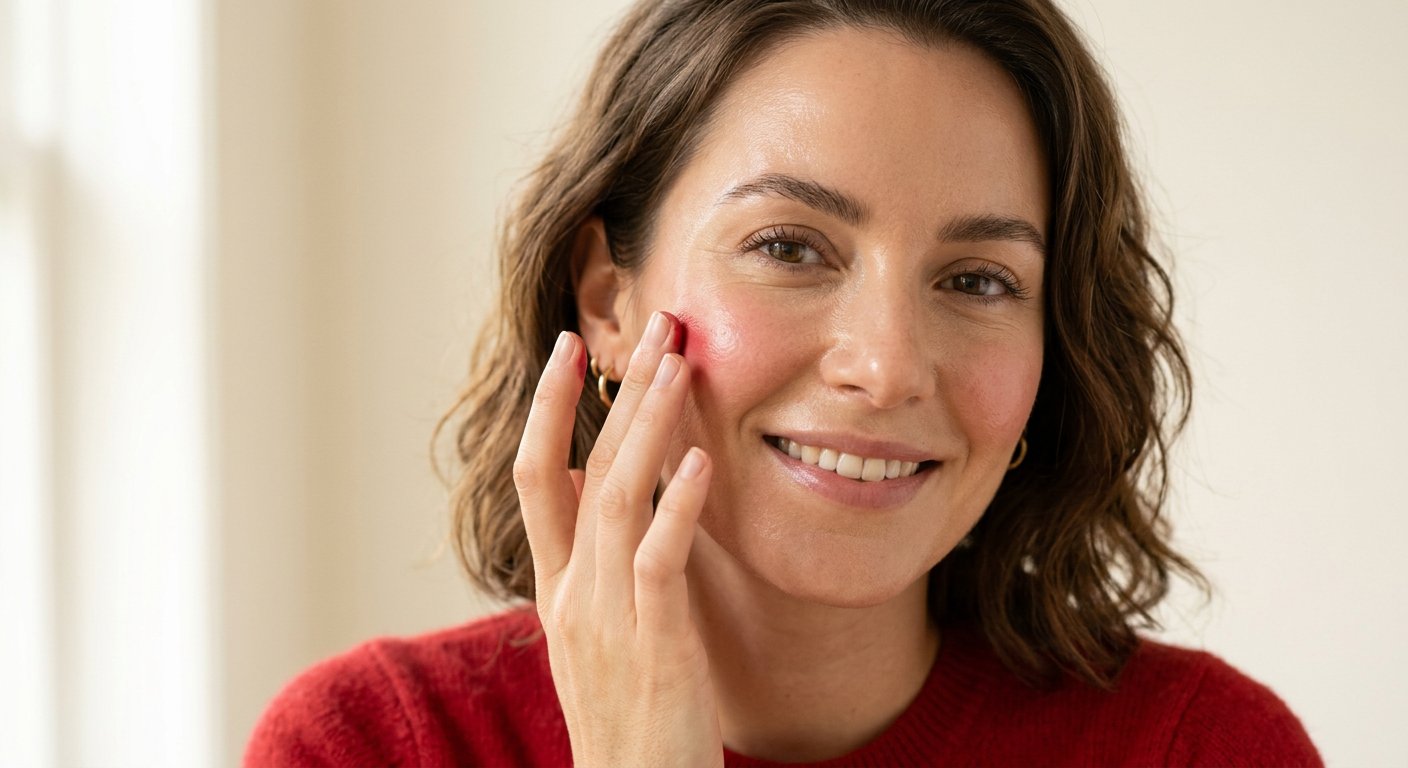
Blush is the step people drop first, and it is the one their face misses the most. Some of us skip it out of habit (“I never wear blush”), some out of fear of looking flushed, and some because we dust it low on the cheeks in the same zone as contour — a technique that, done high on the cheekbone, lifts, but done low, drags.
A face without color reads flat and washed out, especially once foundation has evened everything to one tone. Blush restores the natural gradient that signals health and circulation — it is the single fastest way to look like you slept well. Placement matters as much as the product: color sitting too low or too far in toward the nose pulls the visual center of the face down, while color placed on and slightly above the cheekbone, drifting toward the temple, creates a lifted effect. Matte powder formulas in deep shades can also sit visibly on texture, which does the look no favors.
Cream and liquid blush have become the quiet heroes here because they melt into skin and keep the finish dewy rather than powdery. Smile (or don’t — a relaxed face is truer), find the high point of your cheekbone, and tap the color in there, blending up and out with your fingers. A soft rose or peach, a shade deeper than your natural flush, is the most flattering starting point for most skin tones. One final tip: bring a tiny bit of the same color across the bridge of your nose and lids for a cohesive, “I just came back from a walk” effect that no other product duplicates.
7. Cakey, too-light under-eye concealer
The last mistake is a direct inheritance from the contour-era internet: paint a bright, inverted triangle under each eye — two shades lighter than your skin — set it hard with powder, and expect it to look seamless. On most faces, in most real lighting, it does the reverse.
A heavy layer of concealer sits in the creases of the under-eye within a few hours, and each crease catches light and shadow, emphasizing the very fine lines you were trying to distract from. The too-light shade creates an ashy halo that contrasts with the darkness beneath it instead of canceling it, which draws a spotlight to the under-eye area. Layered with powder, by midday the area looks dry, heavy and obvious — the definition of cakey.
The strategy is thin layers and honest color. Start with a hydrating concealer and apply the smallest amount that does the job — tap, don’t swipe, using the warmth of your ring finger to press it in, because the under-eye skin responds better to pressing than dragging. Choose a shade that matches your skin or is only slightly brighter; if true darkness is the issue, a peach or salmon corrector underneath, applied only where the shadow sits, beats piling on lighter pigment. Set with the tiniest amount of finely milled powder, and only if you need to — a strategically placed powder on the inner corner and outer edge keeps things in place without drying the whole area out. If you wear glasses, take them off and check the result in daylight before you call it done.
The 60-second edit
You do not need to redo your entire routine. Before your next makeup day, try this quick pass:
- Powder with intent — T-zone and nose only, never an all-over matte veil.
- Prep the canvas — moisturizer, sunscreen, sixty seconds before base.
- Take the liner inside the line — and swap flat matte for satin on the lips.
- Sheer the daily base — save full coverage for the days it earns its keep.
- Lift the eyes — top lashes first; keep the lower line soft and outer-corner only.
- Blush, high and creamy — the fastest five years off any face.
- Conceal in whispers — thin layers, matched shade, pressed not painted.
Makeup should feel like fun
None of these fixes ask you to wear less makeup, care less about it, or pretend you are not the age you are. They ask only that your technique serves the face in front of the mirror today instead of the one from an old tutorial. Swap one habit this week — maybe it is the all-over powder, maybe it is the full-coverage bottle living at the front of the vanity drawer — and give it a few days before you judge it.
The best makeup has never been about erasing you. It is about looking lit from within, well-rested and a little more polished than you felt when you woke up. Small habits, small edits, and the same face you already know — just dressed for who you are now.


